

REVIEW · NICOSIA TOURS
Nicosia: Last Divided City, Tour combining South & North
Nicosia tells two stories at once. This small-group walk links the city’s northern and southern sides through Ottoman inns, a former cathedral, Venetian defenses, and the Green Line. I like the small maximum of 10 people, which gives the guide room to answer questions, and I like the way Eleni Ellinas brings in her own family experience of Cyprus. The main drawback is time: two to three hours goes quickly across six historic sites, so this is an introduction rather than a full study of Nicosia.
You begin at Markou Drakou in Agios Dometios and finish at the Ledra Street checkpoint. That route gives the walk a clear sense of movement through the divided capital. At $83.08 per person, the price is not bargain-level, but it can be fair if you value a personal guide, a small group, and context that is hard to gather by walking alone. The tour is offered in English, and each listed stop has free admission.
In This Review
- Key points to know before booking
- Why Nicosia needs a guided walk
- Starting at Markou Drakou and entering the old city
- Büyük Han: Ottoman trade in a restored courtyard
- Selimiye Camii: A cathedral transformed into a mosque
- Venetian walls: The old city’s strange, memorable outline
- Kyrenia Gate and the road north
- Kumarcilar Han: A smaller inn with an older doorway
- Bedesten: Church, market, and meeting point
- Reaching the Ledra Street checkpoint
- Is $83.08 a fair price?
- Who will enjoy this Nicosia experience?
- Practical details that matter
- Should you book this tour?
- FAQ
- How long does the Nicosia tour last?
- How much does the experience cost?
- What language is the tour offered in?
- Where does the tour begin and end?
- How many people can join the tour?
- What happens if the weather is poor?
Key points to know before booking
- A personal look at the Green Line: Eleni connects the city’s political division with local and family experience.
- Six major sites in two to three hours: You see Büyük Han, Selimiye Camii, Venetian walls, Kyrenia Gate, Kumarcilar Han, and the Bedesten.
- The northern old city is the main focus: The route ends at the Ledra Street checkpoint after exploring North Lefkosia.
- A small group improves the conversation: No more than 10 people are accepted on the activity.
- The price pays mainly for interpretation: Admission is free at the listed stops, so the value rests on the guide and the route.
- A useful first visit to Nicosia: It suits you best if you want orientation and historical context before exploring independently.
Why Nicosia needs a guided walk
Nicosia is not a city you understand simply by checking off monuments. Its old center is shaped by a division that remains part of daily life, and the architecture records several periods at once. A Gothic cathedral became a mosque. Ottoman caravanserais became arts spaces. Venetian walls still define the old city’s unusual outline.
I like this tour because it treats those changes as connected rather than separate. You are not just looking at a gate, a market, or a religious building. You are seeing how power, trade, faith, and politics changed the same streets over many centuries.
The guide’s role matters here. Eleni Ellinas is praised for being warm, clear, attentive, and open about her family connection to Cyprus. Her approach appears especially useful on a subject that can become dry or overly political. She also shares practical local suggestions involving coffee, spices, and Cypriot lunch, giving the walk some everyday flavor beyond dates and dynasties.
The route is described as a South and North Nicosia experience, but most of the named sights are in North Lefkosia. You finish at the Ledra Street checkpoint, an important detail when planning the rest of your day. If you want a long visit inside every monument, this tour will feel brisk. If you want a well-shaped introduction to the city’s division and old center, the pace makes sense.
More days in Nicosia:
- From Paphos: Larnaca Highlights Tour with Lefkara & Nicosia
★ 4.2 · 565 reviews - 3-hour Nicosia Segway Tour
★ 5.0 · 323 reviews - Nicosia: Green Line and Buffer Zone Guided Walk
★ 5.0 · 147 reviews
Starting at Markou Drakou and entering the old city
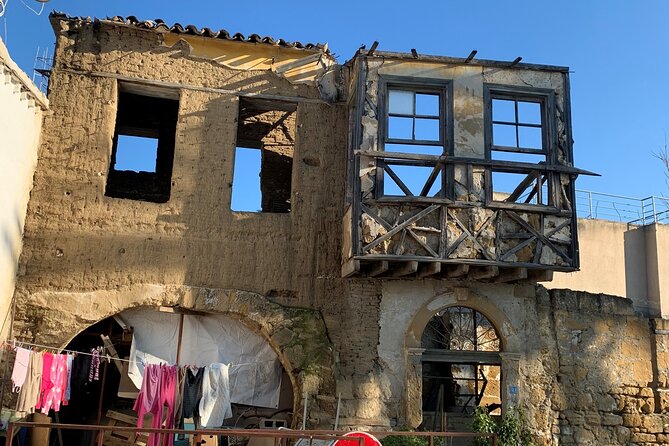
The meeting point is on Markou Drakou in Agios Dometios, Cyprus. The walk ends at Ledras 68, by the Ledra Street checkpoint. Because the start and end points differ, you should plan your onward route before setting out.
This is not a loop that returns you to your hotel or original meeting place. That can be useful if you want to continue into the old city after the tour, but less convenient if you have left belongings elsewhere or need to return to a parked car.
The activity is listed as suitable for most participants and near public transportation. Service animals are allowed. No special fitness level is stated, but you should expect to walk between several central sites and spend time on your feet.
Büyük Han: Ottoman trade in a restored courtyard
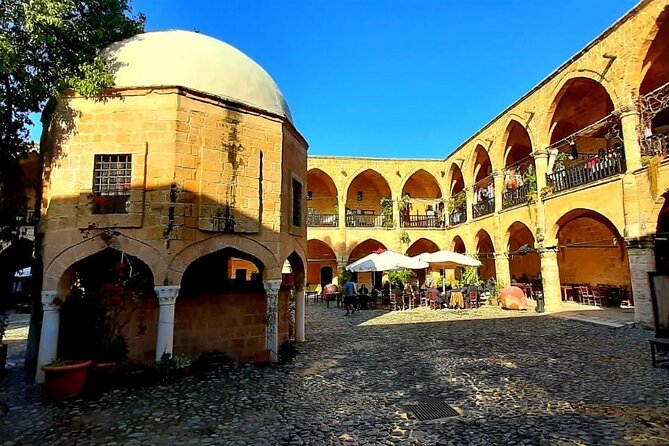
The first major stop is Büyük Han, often called the Great Inn. It is described as Cyprus’s best-preserved Ottoman caravanserai, a type of lodging built for merchants and other people moving between regions.
The building was designed around the needs of the road. People from Anatolia and other parts of Cyprus could stay here, conduct business, and find food or shelter. Today, its role has changed. Galleries, workshops, and arts spaces occupy the inn, and performances such as folklore dancing, piano recitals, and drama displays may take place within its walls.
You have about 30 minutes here, the longest stop on the route. That is sensible. The courtyard and surrounding arcades deserve more than a quick photograph, and this is one place where the building’s layout explains its purpose. I would pay attention to the contrast between its commercial past and its present use as a cultural meeting place.
Admission is free, so the value comes from seeing the building and hearing how it fits into Ottoman Nicosia. If you enjoy architecture, this may be the most immediately satisfying stop.
Selimiye Camii: A cathedral transformed into a mosque
The next visit is to Selimiye Camii, the most prominent landmark in Lefkosia according to the tour description. Its appearance is unusual: French Gothic church architecture meets Ottoman Islamic use.
The building began as the Cathedral of Saint Sophia and dates back to the 13th century. It was later converted into a mosque. That change is not a minor footnote. It shows how the city’s religious and political identity shifted as different powers controlled Cyprus.
You have approximately 20 minutes here. That is enough for an explanation of the building’s past and a look at its major features, though not enough for a slow architectural study. Sources describe it as the largest surviving historic building in Lefkosia and possibly the largest church built in the Eastern Mediterranean during the millennium between the rise of Islam and the late Ottoman period.
I appreciate this stop because it makes Nicosia’s past visible in one building. You do not need to know every phase of Cypriot history to understand the basic point: the structure has been reused, renamed, and reinterpreted as the city changed.
As with the other sites, admission is listed as free. The tour does not promise an extended interior visit or a religious service, so you should think of this as a guided architectural and historical stop.
A few more Nicosia trips worth putting side by side
- Nicosia: Walled City Bike Tour
★ 4.9 · 23 reviews - Nicosia: Last Divided City, Tour combining South & North
★ 4.9 · 18 reviews - Nicosia: Private City Discovery Walking Tour
★ 4.5 · 8 reviews - Ancient City Of PAPHOS
★ 5.0 · 7 reviews
Venetian walls: The old city’s strange, memorable outline

Nicosia’s medieval Venetian walls form one of the most recognizable features of the old city. On a map, the walls create an unusual shape around the center, and the guide uses them to explain how the city was enclosed and defended.
You have about 20 minutes for this part of the walk. The walls are valuable less as a single monument than as a key to understanding Nicosia’s layout. Once you see how they encircle the old city, streets, gates, and districts begin to make more sense.
The Venetians rebuilt the fortifications during the Renaissance when the Ottoman Empire threatened the capital. The walls replaced earlier defenses and included three main gates. Their purpose was military, but they also controlled movement into and out of the city.
This is a place where a guide can add real value. Without context, a wall may look like another old defense. With an explanation of the city’s shape and the pressure behind the reconstruction, it becomes part of the larger story of Cyprus.
Do not expect a long walk along the entire fortification. The schedule allows a focused look, not a full circuit.
Kyrenia Gate and the road north
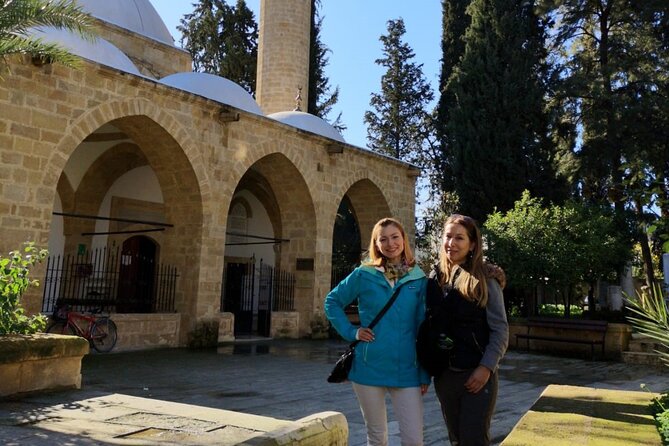
Kyrenia Gate is one of the three gates in the Venetian walls. It gave access to the old city from the north and links the fortifications with the historic road toward Kyrenia.
The stop lasts about 10 minutes, so it is brief. You will hear how Nicosia remained a walled city for more than a thousand years, from the Lusignan period through Venetian and Ottoman rule. That long span helps place the gate in context, even if the visit itself is short.
I like the way this stop follows the discussion of the walls. The gate is easier to understand after you have seen the defensive ring around the city. It is also a reminder that old gates were practical points of control, not simply decorative entrances.
Because the stop is short, you may want to ask your questions as they arise. This is one of the moments when a small group helps. Eleni’s warm, attentive style is repeatedly praised, and the format should make it easier to keep the explanation conversational rather than rushed.
Kumarcilar Han: A smaller inn with an older doorway
Kumarcilar Han, also called the Gambler’s Inn, offers a useful comparison with Büyük Han. It is smaller and more modest, but it follows the same basic idea of an Ottoman inner-city commercial inn.
The building dates to around the end of the 17th century. Its monumental carved entrance is older than the Ottoman conquest, and experts believe the structure may sit on an earlier building, possibly the remains of a monastery. That layered past is exactly what makes the stop worthwhile.
You have about 20 minutes here. The restored inn now contains arts and craft shops, so you can see how another former commercial building has found a new public role.
I would not expect Kumarcilar Han to make the same visual impact as Büyük Han. Its appeal is comparison. One inn is larger and grander, while the other gives you a more modest example of the same urban tradition. Seeing both helps you understand how trade and accommodation worked in the old city.
Bedesten: Church, market, and meeting point
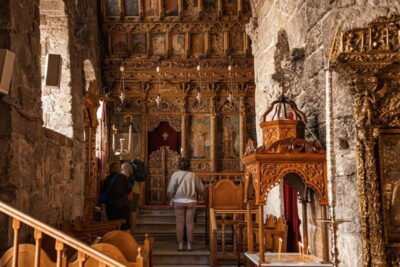
The final named site is the Bedesten, one of Lefkosia’s most important historic buildings. Its past reaches back more than a thousand years.
The structure began as a church around the 6th century. It was expanded and rebuilt between the 12th and 16th centuries, then converted into a covered market during Ottoman rule. The name and use changed, but the building continued to serve the city.
You have about 15 minutes here. That gives you time to examine its character and hear how the Bedesten reflects Nicosia’s mixed cultural past. I find this sort of stop especially useful because it moves beyond a simple list of rulers. A church becoming a market shows how buildings often survive by adapting to new needs.
The Bedesten also brings together the major themes of the walk: religion, commerce, architecture, and changing political control. By this point, the earlier stops should feel connected rather than scattered.
Reaching the Ledra Street checkpoint
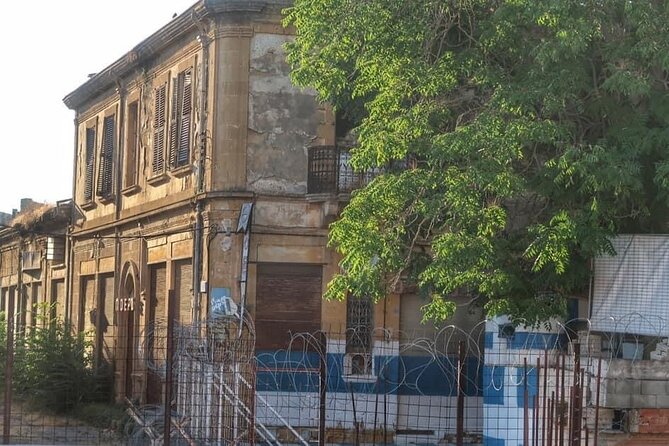
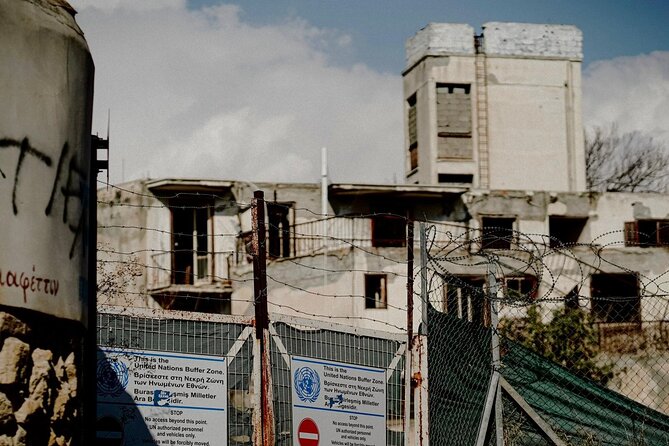
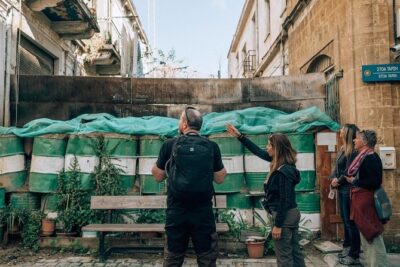
The tour ends at the Ledra Street checkpoint. This is an important practical and emotional finish. The checkpoint is part of the Green Line, the area under United Nations control that divides the city.
The walk does not present Nicosia’s division as an abstract border on a map. Eleni’s personal connection gives the subject a human dimension, and her explanations are intended to help you understand how the division affects the city and the people who live there.
The end point also gives you a choice. You may continue exploring from Ledra Street, stop for food or coffee, or use the location to plan your next movement through the city. The tour does not state that the price includes any paid entry, transport, food, or drinks, so budget separately for those.
Is $83.08 a fair price?
At $83.08 per person, the tour is priced as a guided small-group experience rather than a basic city walk. The six listed stops have free admission, so you are paying primarily for the route, the explanation, and Eleni’s local perspective.
For a group of up to 10, that can be reasonable if you want help understanding the political background and the connections between buildings. A self-guided walk would cost less, but it would require you to assemble the story yourself. Nicosia is precisely the sort of city where context changes what you see.
The value is strongest for a first visit, especially if you are curious about the Green Line, the division between North and South, and the way different cultures shaped the old center. The value is weaker if you prefer slow photography, independent wandering, or long interior visits.
The tour is booked an average of 59 days ahead, which suggests you should not leave it until the last minute if your dates are fixed. Confirmation is provided at booking, and the maximum group size is 10.
Who will enjoy this Nicosia experience?
I would choose this walk if you want:
- A clear introduction to Nicosia’s division
- A local guide who can discuss personal and family connections
- Ottoman, Gothic, medieval, and Venetian sights in one outing
- A small group rather than a large coach-style tour
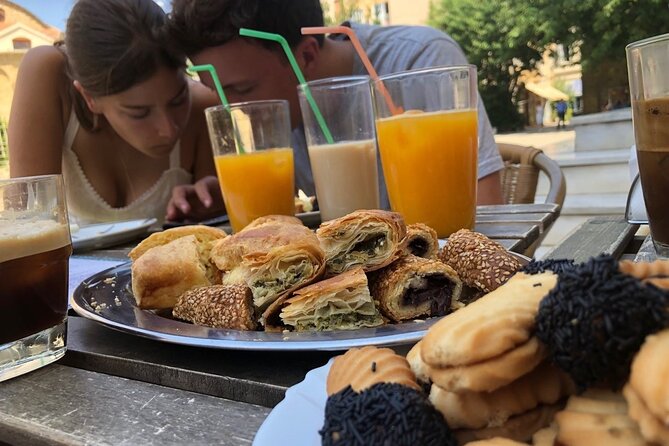
- Practical suggestions for coffee, spices, and a Cypriot lunch
- A route that ends in the central Ledra Street area
I would think twice if you want a full-day historical tour, extensive time inside each building, or a slow walk with long breaks. The schedule is compact, with roughly 115 minutes assigned across the six stops before allowing for movement between them.
The tour should also suit you if you are interested in difficult history but prefer a calm, human explanation. Eleni is repeatedly described as professional, friendly, passionate, and clear. Her personal stories appear to be one of the strongest reasons to choose this particular guide.
Practical details that matter
The experience lasts approximately two to three hours and is offered in English. It begins at Markou Drakou, Agios Dometios 2369, Cyprus, and ends at the Ledra Street checkpoint, Ledras 68, Nicosia 1010.
Wear comfortable walking shoes and allow extra time to reach the meeting point. The tour is near public transportation, but the provided details do not specify a hotel pickup service or return transport.
The activity requires good weather. If poor weather causes cancellation, you are offered another date or a full refund. It also requires a minimum number of participants, and if that minimum is not reached, you are offered another date or experience, or a full refund.
You can cancel for a full refund up to 24 hours before the start time. Changes or cancellations made less than 24 hours before the local start time are not accepted for a refund.
Should you book this tour?
I would book it if Nicosia is new to you and you want the city’s division explained with care rather than reduced to a border crossing and a few old buildings. The combination of Büyük Han, Selimiye Camii, Venetian defenses, and the checkpoint gives you a strong outline of the capital’s past.
The best reason to choose it is Eleni Ellinas. Her local knowledge, personal experience, and friendly approach appear to give the walk a human focus that a standard monument tour may lack.
Just keep your expectations in line with the format. This is a compact two to three-hour introduction, not an exhaustive examination of every quarter or historical period. At $83.08, it makes the most sense for you if interpretation and a small group matter more than low cost. If that sounds right, this is a thoughtful way to begin your time in divided Nicosia.
FAQ
How long does the Nicosia tour last?
The tour lasts approximately two to three hours.
How much does the experience cost?
The listed price is $83.08 per person.
What language is the tour offered in?
The tour is offered in English.
Where does the tour begin and end?
It begins at Markou Drakou, Agios Dometios 2369, Cyprus, and ends at the Ledra Street checkpoint at Ledras 68, Nicosia 1010, Cyprus.
How many people can join the tour?
The activity has a maximum of 10 participants.
What happens if the weather is poor?
If the experience is canceled because of poor weather, you are offered a different date or a full refund.
Recently added from Nicosia
- Explore Lefkara & Nicosia★ 5.0 · 4 reviews
- Kyrenia Half Day Tour with St Hillarion from Nicosia & Kyrenia★ 4.5 · 6 reviews
- Nikosia : Private Custom Walking Tour with A Guide (Private Tour)★ 5.0 · 4 reviews
- Kyrenia Mountain Villages & Wine Tasting from Nicosia or Kyrenia★ 4.5 · 7 reviews
- Private Tour to the Highlights of Kyrenia★ 5.0 · 14 reviews
- Nicosia Walled City Bike Tour★ 5.0 · 4 reviews
- Nicosia Larnaca Lefkara Tour from Aya Napa, Protaras, Larnaca★ 3.5 · 8 reviews
- Private Walking Tour of Nicosia★ 3.0 · 2 reviews
Nicosia Tours, compared.
NORTHERN CYPRUS ALL-IN-ONE Private Day Trip from Nicosia
Read our review →
Lefkara & Nicosia’s Divided Past & Present from Paphos
Read our review →
From Ayia Napa/Protaras: : Walking tour of Nicosia
Read our review →
Larnaca Highlights with visit to Lefkara and Nicosia from Paphos
Read our review →Browse the lists this tour appears in